

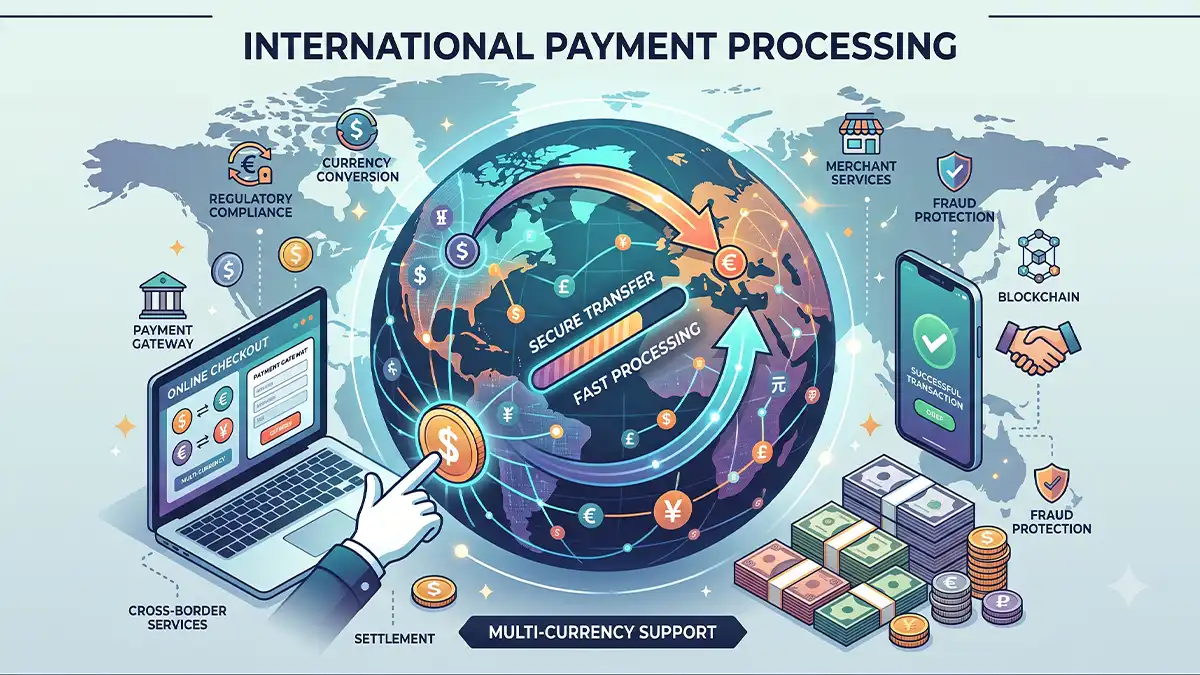
Cybersecurity software often sells globally because threats do not stop at borders. Payment processing needs to support that global customer base without creating unnecessary decline, dispute or underwriting friction.
Global customers change the payment setup
International processing can involve cross-border fees, issuer declines, currency conversion, local payment preferences, fraud screening, sanctions sensitivity and customer support in multiple markets.
A domestic-only processing setup may work early, then become limiting as international traffic grows.
What merchants should prepare
Cybersecurity merchants should understand their customer geography, currency needs, refund policy, support coverage and fraud controls before expanding international sales.
Gateway reporting should separate domestic and international performance so the merchant can identify decline patterns, refund differences and chargeback trends.
MIDsource payment takeaway
A global cybersecurity merchant needs banking relationships, gateway tools and risk controls that fit the actual customer base.
MIDsource helps merchants evaluate international processing options, multi-currency support and underwriting preparation for cross-border growth.
| Review area | Processor concern | Stronger merchant response |
|---|---|---|
| Billing descriptor | Customers may not recognize renewals. | Use clear descriptors, receipts and renewal messaging. |
| Chargebacks | Digital delivery can create evidence gaps. | Keep account activity, delivery and support records. |
| Reserves | Risk can rise with volume or disputes. | Show stable statements, refund control and support workflows. |
| Global sales | Cross-border traffic can raise decline and fraud pressure. | Track geography, currencies and issuer response patterns. |