
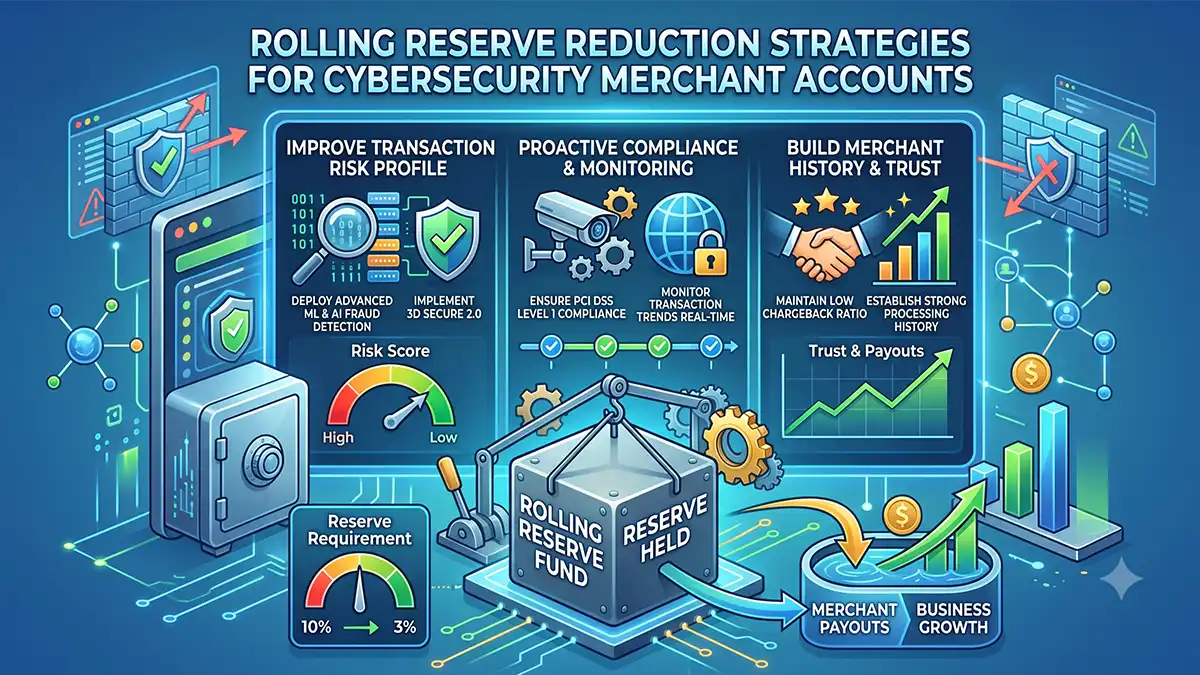
A rolling reserve is not always permanent. For cybersecurity merchants, the path toward lower reserve pressure usually starts with cleaner processing history, stronger documentation and better chargeback control.
Why reserves happen
Processors use reserves to protect against future refunds, chargebacks, fraud losses and business closure risk. Cybersecurity merchants may see reserves because of recurring billing, digital fulfillment, high ticket subscriptions, international traffic or limited history.
The reserve conversation improves when the merchant can show stable volume, healthy refund rates, low disputes and clear customer support procedures.
What supports a reserve review
Useful evidence includes processing statements, bank statements, refund reports, chargeback ratios, reason-code trends, support logs, renewal communications, financial strength and fulfillment proof.
Merchants should also show that volume growth is planned and explain major campaigns before they create sudden spikes.
How to reduce reserve pressure
Focus on dispute prevention, transparent billing, documentation, stable processing behavior and communication with the processor. A merchant that can prove control is in a stronger position to request reserve review.
MIDsource helps merchants prepare reserve reduction conversations and match with acquiring options that understand cybersecurity and SaaS risk.
| Review area | Processor concern | Stronger merchant response |
|---|---|---|
| Billing descriptor | Customers may not recognize renewals. | Use clear descriptors, receipts and renewal messaging. |
| Chargebacks | Digital delivery can create evidence gaps. | Keep account activity, delivery and support records. |
| Reserves | Risk can rise with volume or disputes. | Show stable statements, refund control and support workflows. |
| Global sales | Cross-border traffic can raise decline and fraud pressure. | Track geography, currencies and issuer response patterns. |