

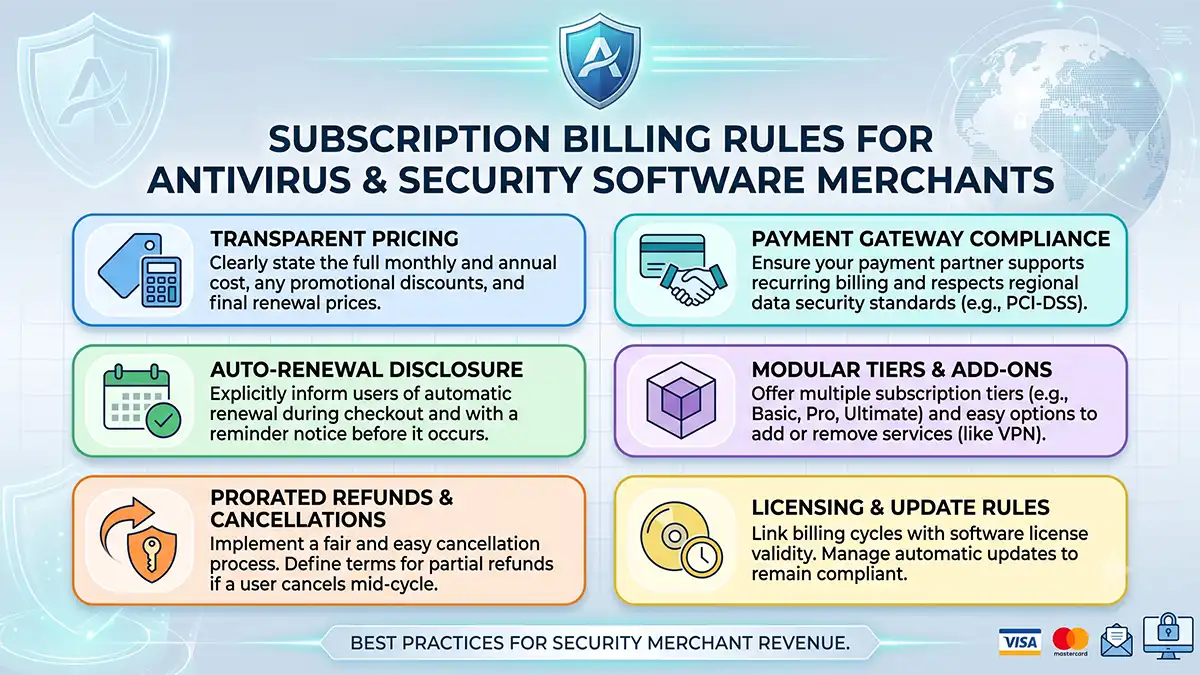
Recurring billing can create predictable revenue for cybersecurity companies, but it also creates predictable dispute risk when customers forget renewals, misunderstand terms or cannot find support.
Recurring billing needs clear communication
Subscription software merchants should make pricing, renewal timing, cancellation terms and support options easy to find before checkout. Annual renewals deserve extra attention because customers may forget a purchase made many months earlier.
Confirmation emails, renewal reminders, receipts and portal language should match the billing descriptor and product name. Consistency reduces confusion.
Declines and failed renewals
Card declines can come from expired cards, issuer risk rules, insufficient funds, cross-border friction or customer account changes. Gateway tools such as account updater, retry logic and decline reporting can help, but they need to be configured carefully.
Merchants should monitor approval rates, involuntary churn, refund rates and chargebacks by subscription cohort so issues are visible early.
Reduce disputes before they happen
Visible cancellation paths, accessible support, renewal notices and clear descriptor strategy can reduce friendly fraud and customer confusion.
MIDsource helps subscription software merchants align their merchant account, gateway settings and chargeback response process around recurring billing realities.
| Review area | Processor concern | Stronger merchant response |
|---|---|---|
| Billing descriptor | Customers may not recognize renewals. | Use clear descriptors, receipts and renewal messaging. |
| Chargebacks | Digital delivery can create evidence gaps. | Keep account activity, delivery and support records. |
| Reserves | Risk can rise with volume or disputes. | Show stable statements, refund control and support workflows. |
| Global sales | Cross-border traffic can raise decline and fraud pressure. | Track geography, currencies and issuer response patterns. |